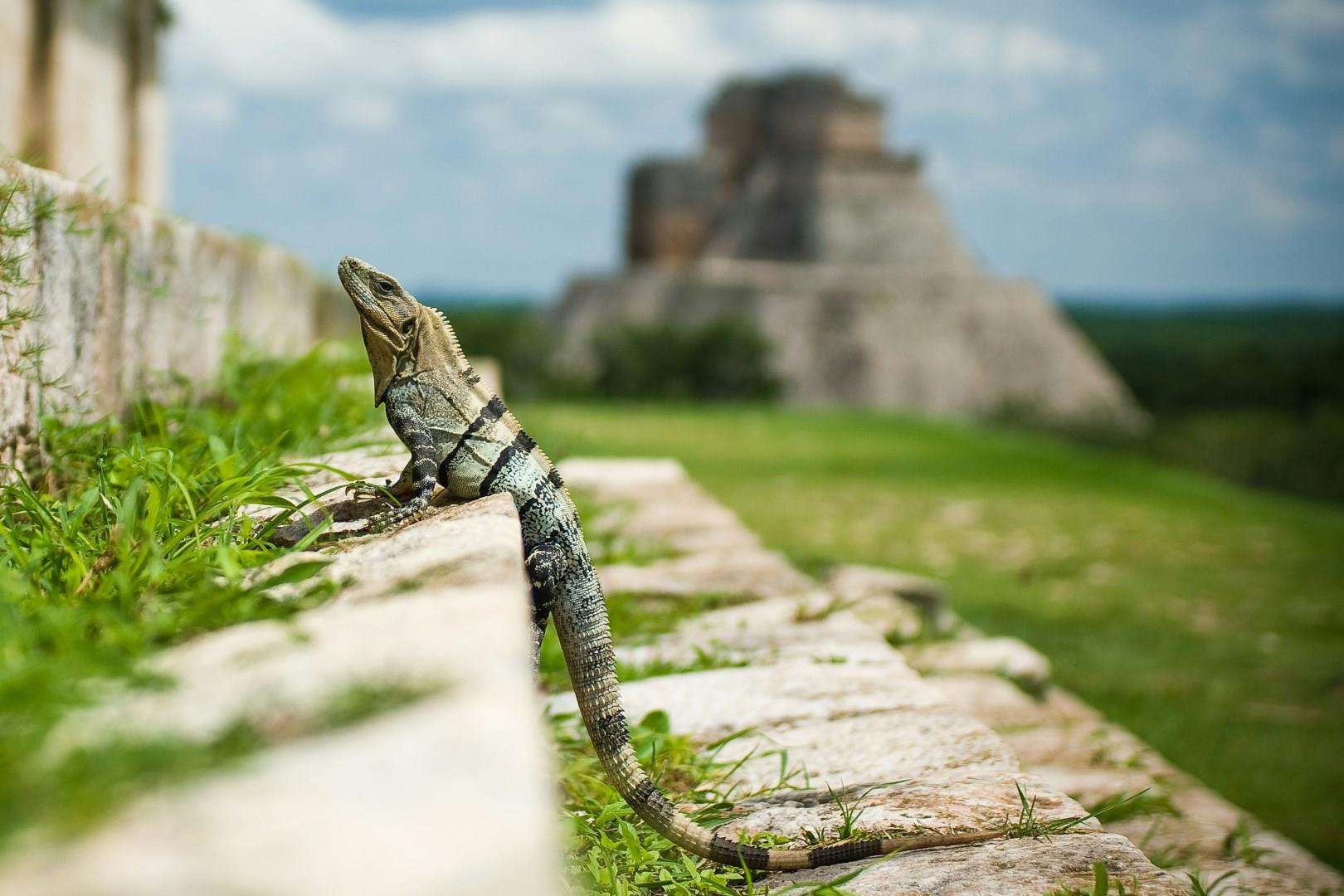
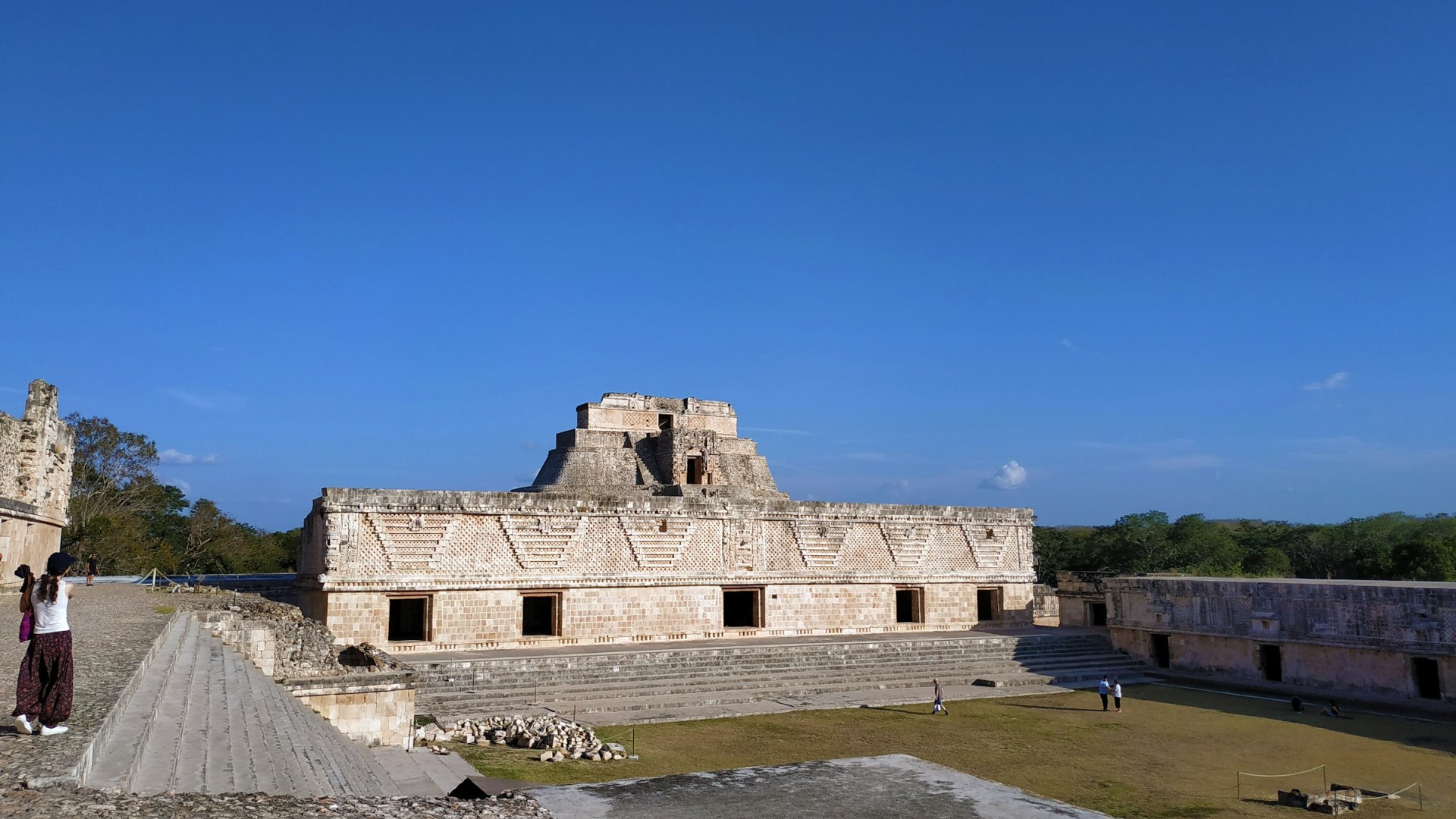
Uxmal, located about 80 kilometers south of Mérida in the Puuc region of Yucatán, is one of the most architecturally refined ancient Maya cities. Unlike other major Maya sites built with steep pyramids and narrow passageways, Uxmal is known for its smooth limestone structures, wide plazas, and intricate stone mosaics. The name “Uxmal” is often interpreted as “thrice-built,” possibly referencing the layered construction of its central pyramid, the Pyramid of the Magician, which dominates the entrance with its unusual oval base and rounded corners.
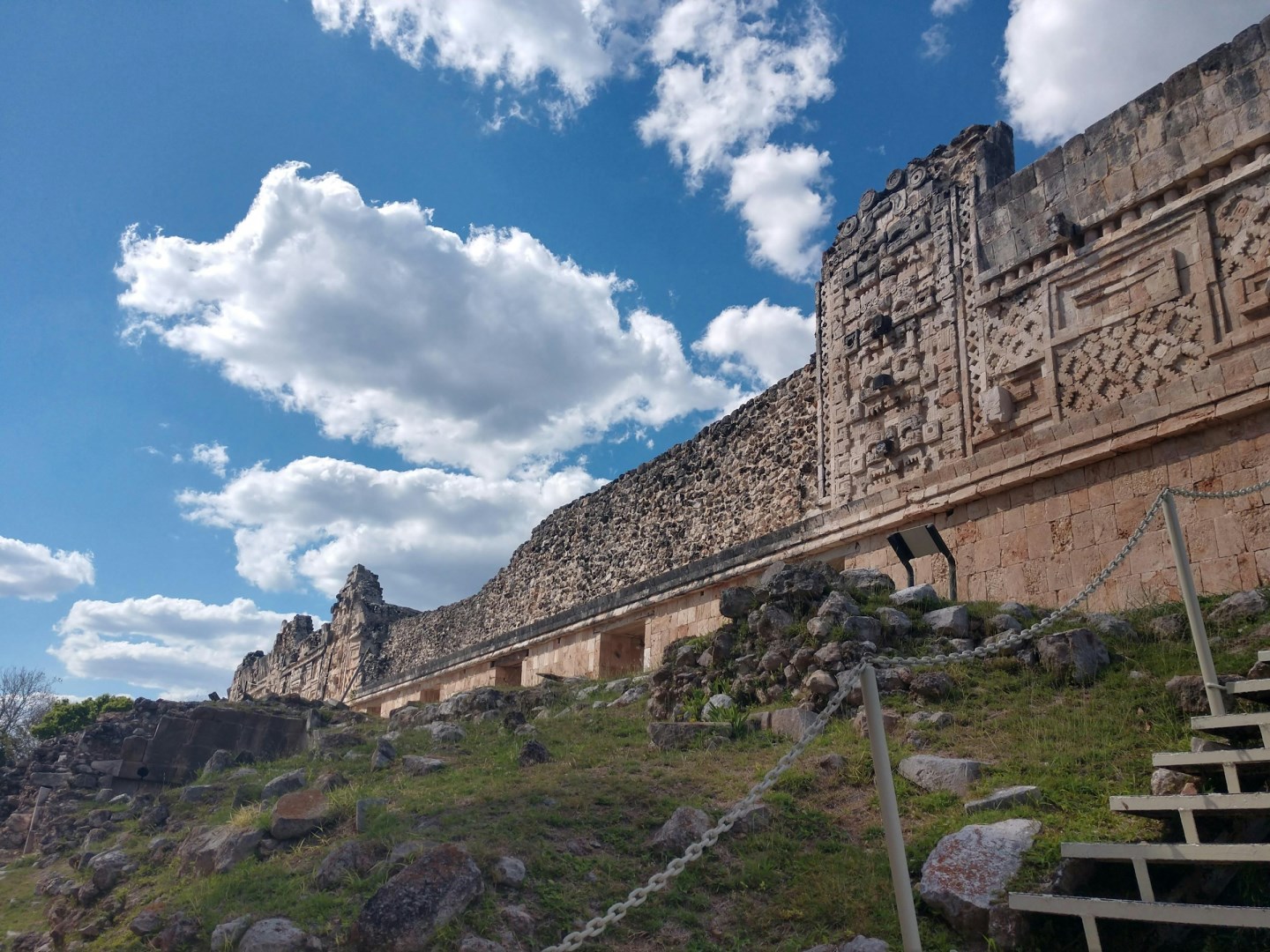
Among the site’s most visited landmarks is the Nunnery Quadrangle, a large courtyard flanked by four elaborately decorated buildings. Its facades are covered with carved latticework, serpents, and masks of the rain god Chaac, an important figure in this dry region where water had to be stored in underground cisterns called chultunes. The Governor’s Palace, built on a large platform nearby, features one of the longest facades in pre-Hispanic architecture and aligns astronomically with the rise of Venus.
One unique experience available to visitors is the nightly light and sound show, which uses colored projections to highlight carvings and narrate local legends and Maya cosmology. While the narration is available in Spanish and English, the atmosphere itself, especially when viewed from the top steps of the Grand Pyramid, offers a memorable look at how ancient people may have once interacted with these ceremonial spaces after dark.